
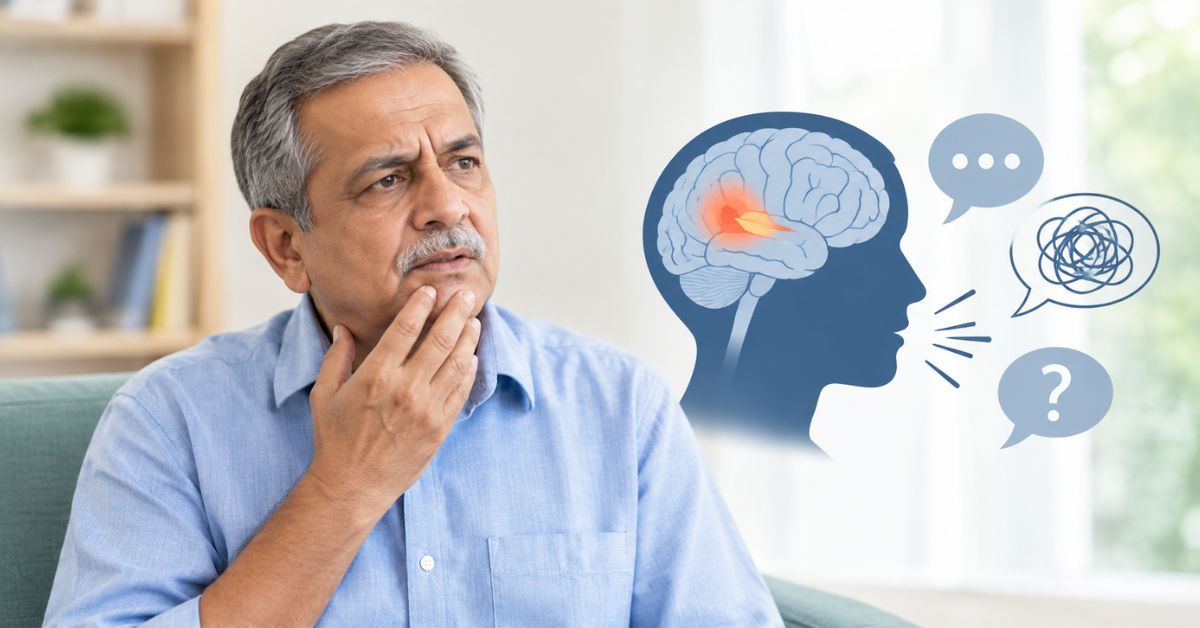
A stroke can affect different parts of the brain, including the areas responsible for communication. One common communication problem after a stroke is aphasia. It can affect a person’s ability to speak, understand language, read, or write.
Aphasia does not mean that a person has lost their intelligence. The person may know what they want to say but may have difficulty finding the right words or expressing their thoughts.
What Is Aphasia?
Aphasia is a language disorder caused by damage to the brain, most commonly after a stroke. It can affect communication in different ways depending on which areas of the brain have been affected.
A person with aphasia may have difficulty:
- Finding the right words
- Speaking in complete sentences
- Understanding what others are saying
- Reading or understanding written information
- Writing messages or sentences
- Naming familiar objects or people
- Following conversations
The severity of aphasia can range from mild word-finding difficulties to significant problems with communication.
Common Signs of Aphasia After Stroke
Speech and language problems after a stroke may appear in different forms. Some common signs include:
1. Difficulty Finding Words
The person may know what they want to say but struggle to remember or produce the correct word.
2. Using the Wrong Words
A person may use a related or completely different word instead of the intended one.
3. Difficulty Understanding Speech
Some people may have trouble understanding conversations, questions, or instructions.
4. Trouble Reading or Writing
Aphasia can also affect reading comprehension and the ability to write words or sentences.
5. Slow or Effortful Speech
The person may speak slowly, use short sentences, or leave out certain words.
Is Aphasia the Same as a Speech Problem?
Not always. Aphasia primarily affects language, while other communication disorders can affect the physical production of speech.
After a stroke, a person may also experience conditions such as dysarthria, where the muscles used for speaking become weak or poorly coordinated, or apraxia of speech, where the brain has difficulty planning the movements needed for speech.
A proper assessment by a speech-language pathologist can help identify the specific communication difficulty.
Can Aphasia Improve After a Stroke?
Yes, improvement is possible, and recovery varies from person to person. Factors such as the location and severity of the brain injury, overall health, and the type of communication difficulty can influence recovery.
Speech and language therapy can play an important role in stroke rehabilitation. A speech-language pathologist assesses the person’s communication abilities and develops therapy activities according to their individual needs.
Therapy may focus on:
- Improving word-finding skills
- Building sentences
- Improving understanding
- Practising conversation
- Reading and writing skills
- Functional communication for everyday situations
- Helping family members communicate more effectively with the person
When Should You Seek Speech Therapy After a Stroke?
If a person continues to have difficulty speaking, understanding, reading, or writing after a stroke, a professional speech and language assessment is recommended.
Early identification and appropriate rehabilitation can help address communication difficulties and support the person in becoming more independent in everyday communication.
How Family Members Can Help Someone With Aphasia
Family support can make communication easier. Try to:
- Speak slowly and clearly.
- Give the person enough time to respond.
- Ask simple questions when appropriate.
- Reduce background noise and distractions.
- Use gestures, pictures, or writing when helpful.
- Avoid finishing every sentence for the person.
- Encourage communication without putting pressure on them.
Most importantly, remember that aphasia affects communication, not a person’s intelligence or thoughts.
Speech Therapy for Aphasia After Stroke in Indore
If you or your family member is experiencing speech and language problems after a stroke, a professional assessment can help identify the type and severity of the communication difficulty.
A speech-language pathologist (SLP) can recommend an appropriate speech therapy and rehabilitation plan based on the individual’s needs.
If you are looking for aphasia or speech therapy after stroke in Indore, consult a qualified speech-language professional for an assessment and personalized guidance.
Umang Speech & Hearing Clinic provides speech and language assessment and therapy support for individuals experiencing communication difficulties.